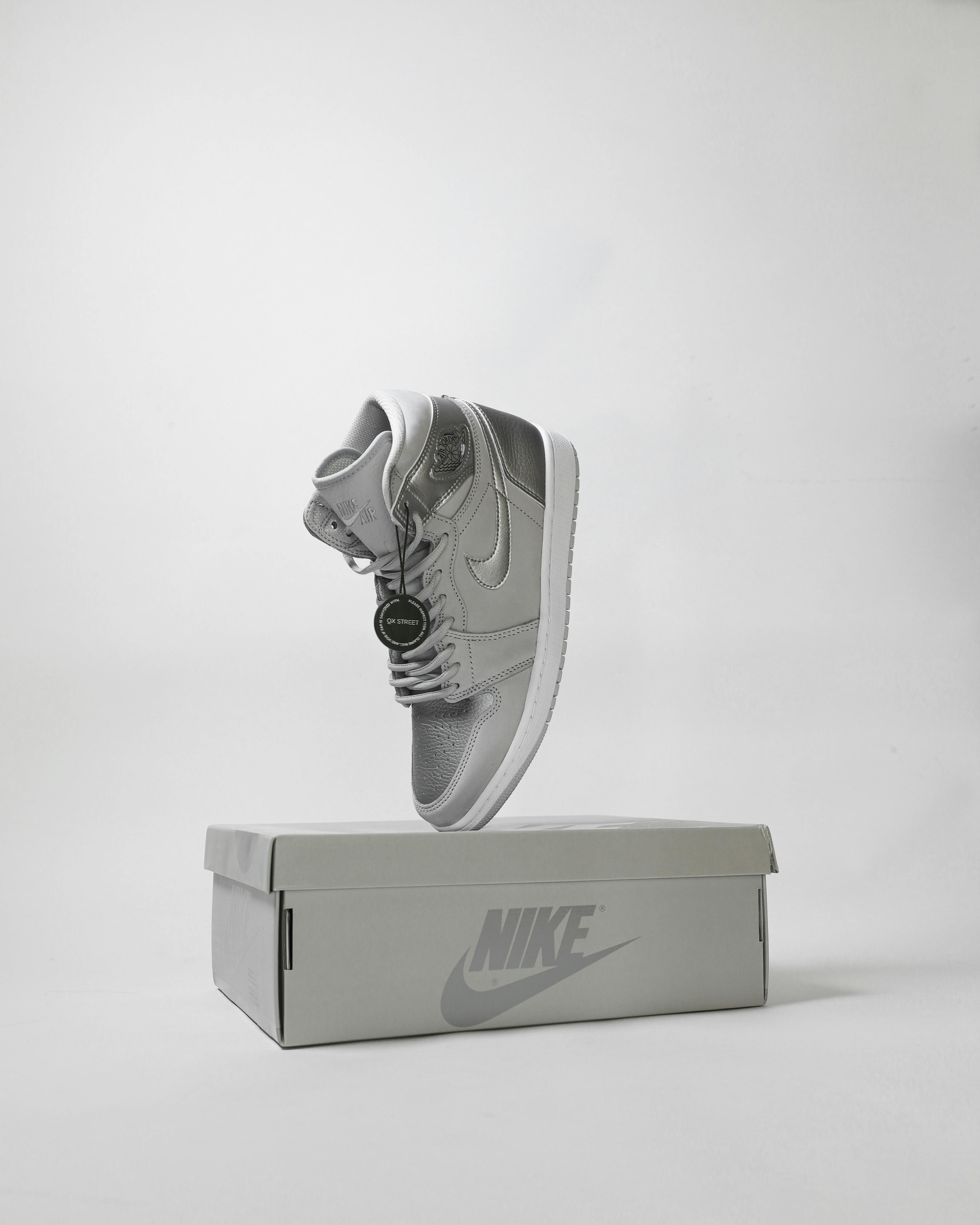
Enter any shoe store in 2026 and you’ll see Air Jordans sitting next to mainline Nike sneakers like the Air Force 1, Air Max, and Dunk — but despite operating under a parent company, these kicks inhabit markedly different worlds in terms of creative direction, pricing, cultural relevance, and audience. The uncertainty is reasonable: Jordan Brand operates under the Nike corporate umbrella, every Air Jordan carries Nike Air tech, and both brands co-utilize production facilities. Yet the gaps are considerable and merit exploration, above all when determining where to put your sneaker budget. Air Jordans carry premium prices that can be double or triple comparable Nike shoes. This comparison explores the key differences across branding, aesthetics, innovation, cost structure, cultural weight, and resale behavior.
Jordan Brand exists as a branch of Nike, Inc., but behaves with notable autonomy shaping product design, marketing, and distribution channels. Nike acquired exclusive rights to Michael Jordan’s name and likeness in 1984 with a five-year, $2.5 million contract that has since become a relationship valued at an reported $150 million each year in payments to Jordan alone. In 1997, Nike officially split the Jordan line into its own label with a distinct design team, marketing division, and brand CEO — currently Craig Williams, who oversees a business that brought in approximately $6.6 billion in income during fiscal year 2025. General Nike sneakers operate under the broader Sportswear and Basketball departments, splitting budgets and brand value across dozens of categories from track to training to lifestyle. The Jumpman logo — based on from a iconic photo of Jordan during the 1988 Slam Dunk Contest — is legally distinct from the Nike Swoosh and https://alljordanshoes.com/ signifies a separate persona that customers perceive as more elite and high-end. This corporate structure means Jordan Brand governs distribution more closely, capping supply to preserve exclusivity in ways that the broader Nike roster, with its mass-market mandate, typically does not.
The design philosophy behind each brand contrasts at a core level in creative origin and artistic vision. Every signature Air Jordan shoe was crafted to reflect Michael Jordan’s character and passions — the Jordan 9 drew from international design elements, the Jordan 15 from a military aircraft, the Jordan 33 from space exploration. Nike’s general lines favor wide usability and broad appeal, yielding evergreen designs like the Air Force 1 and Air Max 90 that are understated rather than narrative-driven. Jordan Brand employs a smaller design staff that outputs less product but channels more energy into each, creating stronger unique personalities. Fabric selections on Jordans tend toward the innovative — patent leather, elephant print, carbon fiber — while Nike lifestyle shoes use classic fabric choices. Collab approaches also vary: Jordan collaborates with fashion houses like Dior and A Ma Maniére, while Nike collaborates more diversely across sportspeople and creatives.
Both brands use Nike’s patented technologies, but how they deploy it diverge. Jordan performance shoes regularly introduce new tech first — the Jordan 28 debuted a Flight Plate that afterward influenced Nike’s wider lineup. Jordan’s basketball lineup integrates Zoom Air, React foam, and Formula 23 cushioning technology in original setups. Standard Nike basketball sneakers like the LeBron and KD series use the same core systems but are tuned for different wearers’ movement patterns. For everyday and classic models, the difference closes — a retro Air Jordan 1 and an Air Force 1 both share fundamental encapsulated Air. Nike’s running arm leads in cushioning innovation with ZoomX and Alphafly, technologies absent from Jordan shoes since the brand does not make running shoes. The takeaway: for basketball, both brands present strong tech, but Jordan concentrates innovation on a narrower product lineup.
| Category | Air Jordan | Standard Nike |
|---|---|---|
| Typical Retail Price | $180–$250 | $90–$180 |
| 2025 Revenue | ~$6.6 billion | ~$45 billion (total Nike) |
| Distribution Approach | Scarce, tightly managed | Broadly available plus limited |
| Main Logo | Jumpman | Swoosh |
| Typical Resale Premium | 120–400% of retail | 80–150% of retail |
| Target Demographic | Collectors and enthusiasts, 18–40 | General consumer, all ages |
| Athletic Categories | Basketball, Lifestyle, Golf | Running, Basketball, Training, Soccer, etc. |
The price difference is one of the first details buyers spot. In 2026, Jordan retro releases sell between $180 and $250, while comparable Nike lifestyle shoes sit between $110 and $170 — a 40-60% premium for the Jordan label. This markup accounts for superior fabrics, more controlled manufacturing, Jordan royalty costs, and cultural status that drives willingness-to-pay. For on-court basketball, the disparity is tighter — a Jordan Tatum 3 sells around $130 while a Nike KD 17 sits at $150. The cost-benefit analysis shifts dramatically on the resale market, where restricted Jordans frequently sell for 200-500% of retail while most Nike standard releases depreciate below retail within a few months. For pure functionality at a reasonable price, Nike delivers better bang for your buck; for social currency and resale potential, Jordans validate the higher cost.
The cultural significance of Air Jordans far dwarfs any general Nike product line. Jordans are tied to Michael Jordan’s legacy — six titles, five MVPs, ten scoring crowns — and every pair possesses an built-in connection with the greatest athlete of the 20th century. In music, Jordans have been name-dropped in over 5,000 hip-hop songs since 1985, compared to approximately 2,000 for all other Nike shoes collectively. The sneaker resale market, estimated at over $10 billion in 2026, sources 35-40% of sales volume from Jordan releases on platforms like StockX. Digital media paints a like picture: Jordan launch news create 3-5 times more activity than comparable Nike mainline releases. Wearing Jordans projects entry in a specific tribe and understanding for basketball heritage that surpasses the actual shoe.
The aftermarket is where the gap gets most quantifiable. Scarce Jordans vanish within moments and earn premiums of 50-300% on resale platforms, while most Nike launches linger in stock at or under retail for weeks. StockX data reveals the typical Jordan retroed model maintains 120% of original retail one year after launch, while the mean Nike mainline shoe holds only 75%. The most notable example: the Travis Scott x Air Jordan 1 Low “Reverse Mocha” hit $2,100 — roughly 1,400% of its $150 retail. Even popular Nike collaborations like Off-White Dunks rarely surpass 500% of MSRP. For shoppers considering sneakers as investment vehicles, Jordans deliver a solid argument, though general releases can fall below retail too.
The “right” choice comes down entirely to your needs, routine, and finances — there is no universally correct answer, only the pick that aligns with what you genuinely care about in shoes. If you’re a basketball fan, dedicated collector, or someone who prizes cultural status and investment upside, Air Jordans bring a combination of heritage, scarcity, and shared identity that regular Nike products cannot match at any price point. If you are looking for comfy, multipurpose daily shoes across diverse athletic and casual categories with more affordable prices and wider access, Nike’s general lineup delivers superb craftsmanship without the premium pricing or acquisition stress linked to Jordan launches. Price-sensitive sneakerheads can assemble solid Nike collections for the price of two or three Jordan retro releases, and Nike’s standard shoes regularly use the same midsole tech at substantially lower prices. The ideal approach for many sneaker fans in 2026 is a mixed collection — holy-grail Jordans for special events alongside everyday Nike trainers and lifestyle shoes for everyday wear. Both brands benefit from Nike’s industry-leading factory operations, fabric sourcing, and quality assurance, so neither option is a waste of money in construction quality. Appreciating that Air Jordan and Nike address different functional and emotional needs — rather than treating them as the same thing — creates more informed spending decisions and a more fulfilling shoe collection in the long run.
Check out the lineups at Jordan Brand and Nike.com.